
Free Financial & Estate Planning Workshop
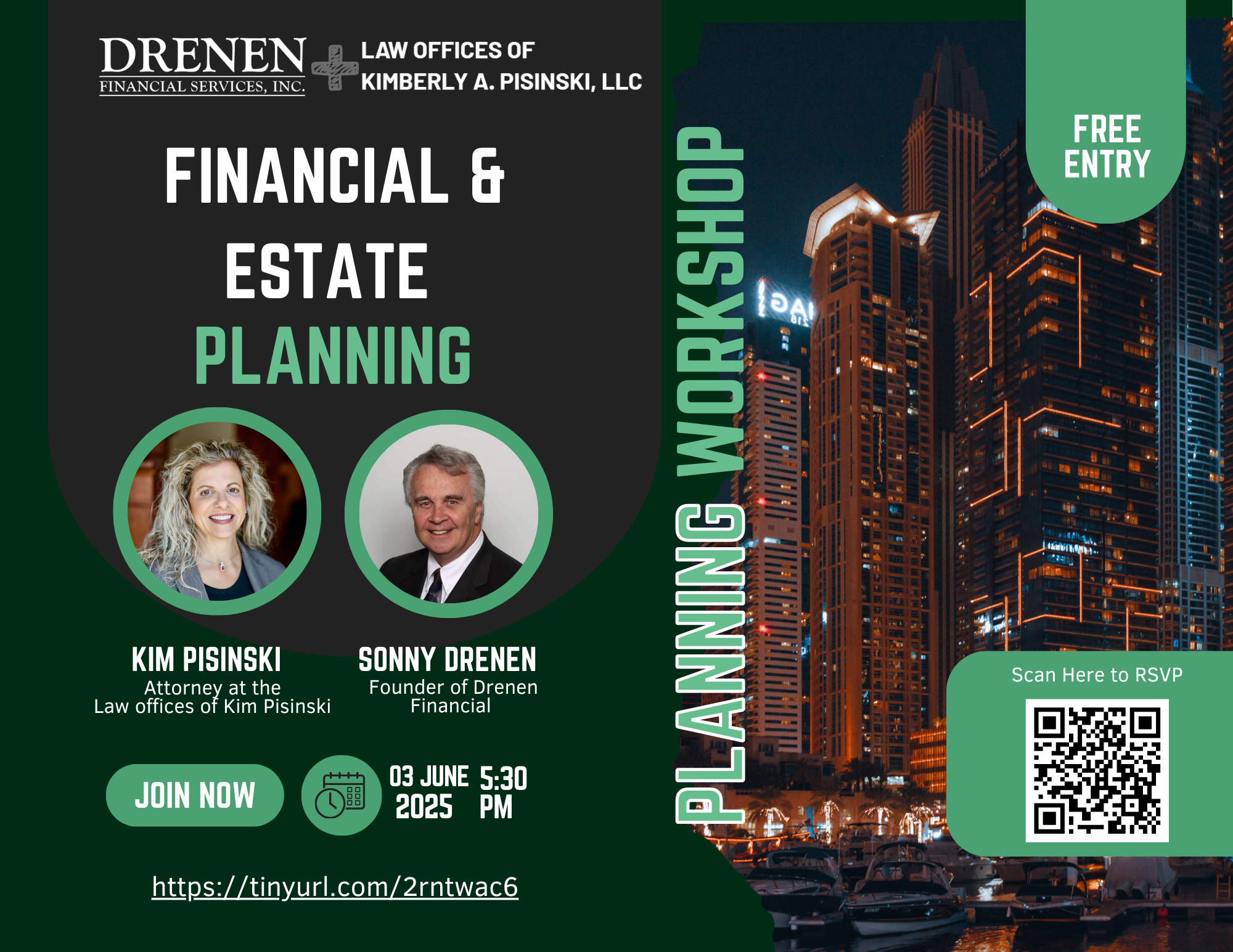
Join Us for a Free Workshop on Estate & Financial Planning
Don’t miss this special opportunity to learn from two experienced professionals about how to secure your future. Attorney Kim Pisinski and Sonny Drenen of Drenen Financial will walk you through key strategies to:
- Protect your assets
- Plan your legacy with confidence
- Reduce tax burdens and avoid probate
📅 Event Details
Date: Tuesday, June 3, 2025
Time: 5:30 PM – 6:30 PM
Location: MillWorks, Westfield, MA
Cost: Free – RSVP Required
🎟️ RSVP Now
Space is limited. Reserve your spot today!
👥 Speakers
- Kim Pisinski, Esq. – Estate Planning Attorney
- Sonny Drenen – President, Drenen Financial Services, Inc.
❓ Why Is Estate and Financial Planning Important?
Estate and financial planning isn’t just for the wealthy—it’s for anyone who wants to protect their family, plan for future healthcare decisions, avoid probate delays, and ensure their wishes are honored. This workshop will walk you through the fundamentals and show you how to take simple, smart steps now to avoid costly consequences later.
🏢 About Drenen Financial Services
Founded by Sonny Drenen, Drenen Financial Services has been serving clients across Massachusetts for over 30 years. The firm offers tax preparation, financial planning, and wealth management with a strong commitment to client education, integrity, and personalized guidance. Learn more at drenenfs.com.
⚖️ About Attorney Kim Pisinski
Kim Pisinski is an estate planning attorney known for her thoughtful, family-centered approach. With decades of legal experience and a passion for helping individuals prepare for the future, Kim has guided hundreds of clients through wills, trusts, and estate planning essentials. Her goal is to make legal planning clear, compassionate, and approachable.
This event is for educational purposes only and does not constitute legal or investment advice. Hosted by Drenen Financial Services and The Law Offices of Kim Pisinski.
📘 Frequently Asked Questions About Estate Planning
1. What is estate planning?
Estate planning is the process of preparing legal documents to manage your assets and decisions during your life and after death. It includes wills, trusts, healthcare directives, and more.
2. Do I need a will even if I don’t own much?
Yes. A will allows you to choose who gets your belongings, name guardians for minor children, and avoid unnecessary complications for your loved ones.
3. What’s the difference between a will and a trust?
A will goes through probate and takes effect after death. A trust can avoid probate and take effect during your lifetime, offering more privacy and control.
4. What happens if I die without a will?
Your assets will be distributed according to your state’s intestacy laws, which may not align with your wishes. A judge, not you, decides who gets what.
5. What is probate and why do people try to avoid it?
Probate is the court process of validating a will and distributing assets. It can be time-consuming and public. Many use trusts or joint ownership to bypass it.
6. Who should I choose as my executor or trustee?
Someone responsible, organized, and trustworthy — often a close family member, friend, or attorney. They’ll be in charge of handling your estate.
7. Can I update my estate plan later?
Yes. You should review and update your plan after major life events like marriage, divorce, births, or major financial changes.
8. What is a healthcare proxy or medical directive?
It’s a legal document that names someone to make medical decisions for you if you’re unable to communicate. It’s a key part of a complete estate plan.
9. What’s a power of attorney and why is it important?
A power of attorney lets someone manage your financial or legal matters if you’re unable to do so. It’s essential for protecting your interests.
10. Is estate planning only for older adults?
No. Adults of any age — especially those with children or assets — benefit from having a basic estate plan in place.
11. How do I start the estate planning process?
Start by listing your assets, deciding on key decision-makers (like guardians or executors), and meeting with a qualified attorney to draft your documents.
12. Are online wills good enough?
Online templates may work in simple cases but often miss key legal requirements or state-specific rules. It’s usually safer to work with an attorney.
13. Can estate planning help protect against long-term care costs?
Yes. Some estate plans include strategies to protect assets while planning for potential nursing home or assisted living expenses.
14. What’s the most common mistake people make in estate planning?
Not doing it at all — or forgetting to update it. Another common issue is failing to coordinate beneficiary designations with their plan.